

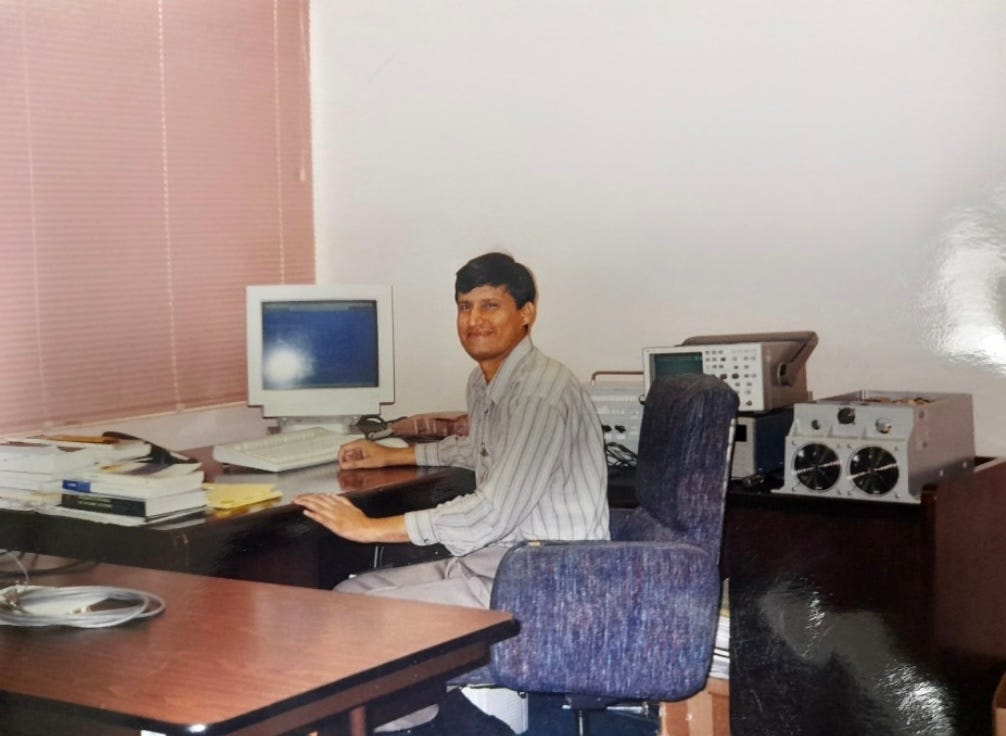
Last August marked my dad’s 30th anniversary of immigrating to America. The 90s were a different time, as he never fails to remind me. He slept on the couch of his friend’s one bedroom apartment, clicked around at a desktop the size of his laundry basket. It was just different, really, every time he’d drive by the mall, waiting for the day his wife and kid’s visa would get approved.
In this case, work was the golden ticket that brought him across the ocean. His profile as an engineer was growing luminous, and in his travels to the UK, Hong Kong, maybe even Switzerland, too, he was an unexpected catch for the Los Angeles tech scene. They didn’t quite need to know that he spent his teen years on the family farm, or that he was about eight years old when his father was taken as political prisoner. What they saw, and what I still see as his youngest child, was a man who can conjure up a circuit design out of nothing.
If those traumas crossed the border with him, I would’ve had a hard time pointing out how. For all that history brought over, he could condense it into one box on the census. Asian, a formality more than an accepted identity. In those thirty years that passed since his arrival, I found myself checking that box, too. On college apps, on job websites.
Lately, the forms with an Asian box now seem to allow a more specific subcategory, and Pakistani is usually there. But that itself is a fickle idea. Where the homeland has enormous diversity, it gets flattened into a subset of boxes to then serve another pool of American diversity. Our Muslim practices are essentially like other American Muslims, save for some inflections of traditional South Asian practices. And of course, South Asian is a watery term too. No one called it that until the British, my dad told me over coffee once, perhaps angrily. So why on Earth would I be calling myself that?
I could swap it out for Punjabi, but that would’ve ignored the unclear history of my maternal side. In rotating through the first half of my identity, the hyphen always stuck around. What remained attached was “American,” be it Pakistani, South Asian, Asian, Muslim, brown, second generation.
The way my dad joined the workforce in the U.S. was ideal, for all intents and purposes of being hyphenate. With hard work, he proved his labor to be lucrative. And with some of that hard work, he lifted himself out of economic instability. Never mind future job loss or unfortunate business decisions, it was all on his account, in true American spirit.
It came as a shock when I learned that his first company’s biggest contracts were signed with the military. It elicits a chuckle out of my dad when I ask him about it. Things just aren’t black and white, he says.
Only, it didn’t seem to bring the long-term benefit of a successful family, either. For what it’s worth, I do believe that we had much better structural footing than much of the people he knew in Pakistan. He, for example, benefited from the immigration policy emerging in the 1960s that gave preference to educated, high potential immigrants. Regardless, whether it was poorly planned financial strategy or simply a matter of supporting well over two dozen people back home on one salary, the fuel was bound to run out repeatedly.
Working for a company that develops weapon technology was not immoral, at least, not outright. It was the result of narrow choices available in a situation where staying put was hardly an option. But at what point is surviving in a new country a strong enough reason to take those jobs? They seem to arise from a sincere belief in the power of technology to make people’s lives better, much like my dad’s fascination with engineering since childhood. If not a solution to economic precarity at home, then it’s at least as a genuine interest in a highly technical industry.
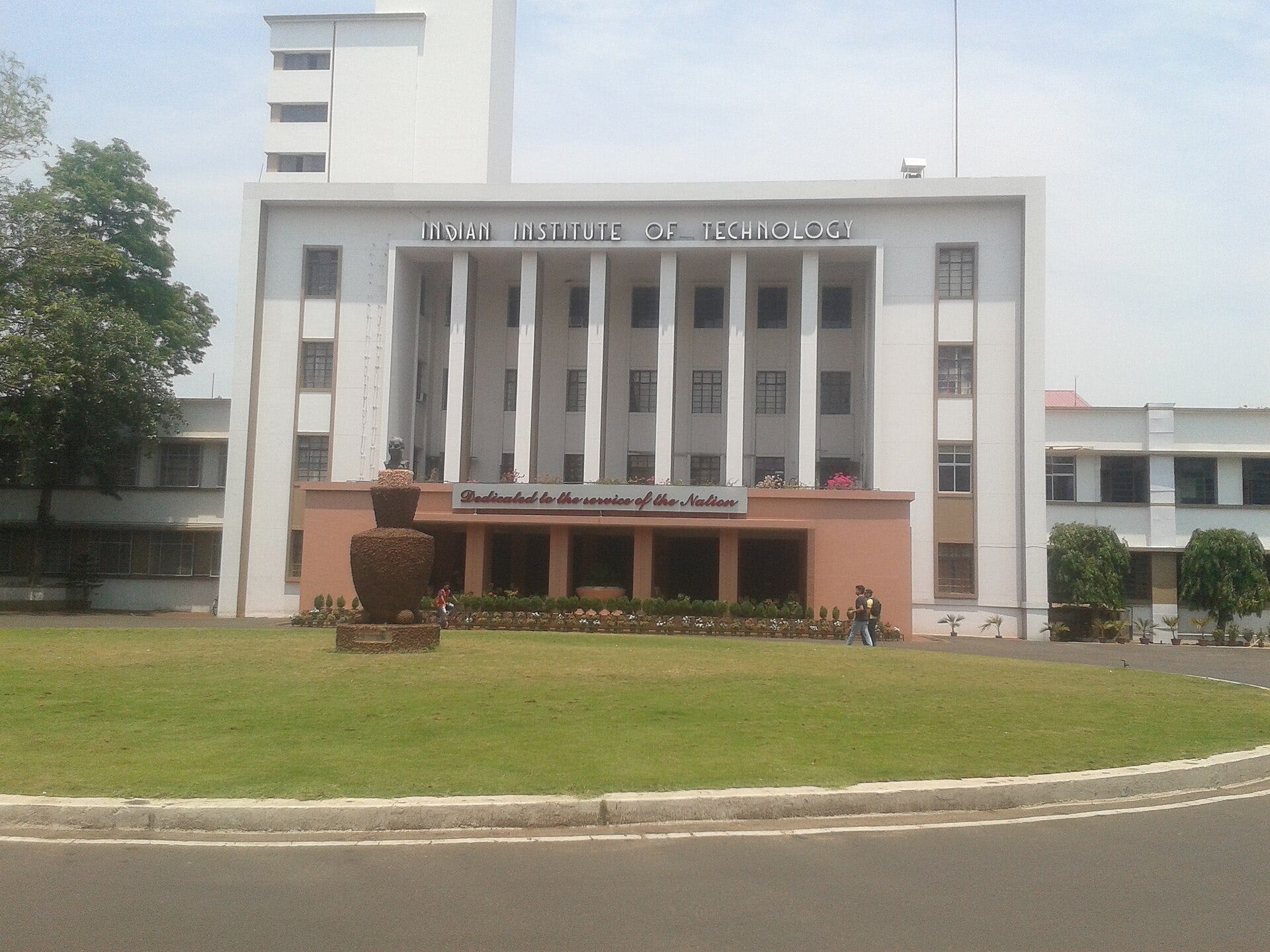
Yet for many of those who were granted visas during the major immigration waves of the 1970s and beyond, their work in the west was granted on proven achievement. True, a degree from a place like the Indian Institute of Technology might not have automatically granted someone financial security. But when the rungs of the American corporate ladder continued to shine for these immigrants, it seemed less and less likely that those positions were needed for escape from poverty.

My dad didn’t play that ladder, but plenty of others in his class did. Google’s CEO, Sundar Pichai, is a prime example of the wealth that has been amassed by Indian immigrants. With a net worth of $1.4 billion, he has made history as the first person of South Asian descent to lead Google and its parent company, Alphabet.
“India is a part of me, and I carry it with me wherever I go,” he told the press in a 2022 awards ceremony.
On some level, this kind of ascent is intoxicating in the status it can bring. A model minority is built on the promise that a country will provide ample opportunity for social mobility as long as one earns it. To arrive in a foreign country and exceed all expectations is a real badge of honor. Naturally, an executive position at a tech company is even more enticing when presented as something rightfully earned.
By that point, survival is more than sustained. You might even take on such a role believing in the company’s ethos of expanding human possibility. In exchange, the same technology later powers the drone strikes launched on Muslim countries. Or, if “Muslim” requires substitution, then that same technology is resold to places like India where it was trained with dirt-cheap, often traumatic labor. Some of the women in rural India, who were abruptly given the task of moderating pornographic content as expected parts of their work with AI companies, have described their employment as "graphic and relentless."
Sundar Pichai said it best. “I am grateful for the opportunity to bring the benefits of technology to more people.” Indeed, the people he chooses. It would follow that a diaspora that benefited from hierarchies allowing them to pursue education and immigration continues to build new ones in new countries. Caste is a famous example, but even a country like Pakistan, which my father swears has no concept of caste, creates a culture around rigid marriage arrangements within appropriate classes and family origins.
Asking for solidarity with the homeland is a fool’s question. South Asia has never existed as a uniform identity, and in fact has long defined itself in terms of ethnic, linguistic, and cultural diversity. Why should we expect immigrants from the region to automatically view those back home as part of their community? The community we join is an American one, where we are crammed into a box labeled “Asian” on government forms, where a return on the investment of immigration must be realized.

Unsurprisingly then, leveraging ethically compromised ladders for personal security should not be seen as a new tradition. It can at least date back to a colonial residue that was left by the recruitment brown people to subjugate other brown people. In one 1916 report on the colonial administration of the territory now known as Odisha, officials noted that it was “custom” for Sardars (tea plantation laborers who recruited workers from their own communities) to send relatives into areas of interest in order to do the recruitment for them, much to the aggravation of English plantation owners. Many of these sardars came from economically precarious situations, and it would be patronizing to suggest that they didn’t understand the nature of their work. Really, they seemed positioned as both intermediaries trying to circumvent authority while also trapped in a system that exploited their community status to recruit even more vulnerable people to excruciating work.
The same practice bolstered the military effort for World War I, where recruiters were sourced from local communities, often poor and lacking literacy, to enlist the support of upwards of 1.5 million native colonial subjects at its peak. As opposed to conscription, which would seem more outright offensive morally, recruitment put a layer of distance between the crown and the colonial subjects.
It appears that the differences today are geographical, if not even more submerged. The exact work my dad does is classified information; is he making bombs, missiles, or the casing of a missile? Might he be making engines that are meant for vehicles other than war tanks, like vehicles which can save lives on rescue missions?
My dad is well aware of my criticisms, but he’s also well aware that I don’t have many serious alternatives. When even a company like Google has engaged in its own form of violence abroad and even supplies its technologies to the Department of Defense, it’s quite inadequate to tell my father that he should simply take his talents elsewhere.
What I would emphasize, however, is that the horror we express at horrifying events abroad often overlooks our role in producing it. In Iran, drone warfare has increasingly characterized the American front of aggression. And as gas prices skyrocket, so too do the missiles in Iran: missiles which were ideated in plain buildings in Los Angeles, technology that was designed in offices just a walk away from a Persian restaurant.
The solution for the South Asian identity crisis, at least for the one I have embraced, is not going to emerge in the form of diversity initiatives or vague notions of solidarity. Especially when “diversity” has become a phrase co-opted by these very technology giants, the starting point to freedom comes from recognizing where we sign warfare into existence. Checking the Asian box on the census, for example, is a symbol for this violence. Whether it becomes ten boxes or stays rigid, the point remains: a checkmark becomes an allegiance to a cause we did not otherwise have the choice to endorse.